 |
|
|
|
|
|
|
|
|
|
Trends After Arrival |
|
|
|
* Dispersion of immigrants
throughout the country.
* Most
immigrants settle in cities as it is easiest to avoid persecution and
get at least some form of
work.
* NYC- 1910: 3/4 were immigrants or children of immigrants.
|
|
|
|
 |
|
|
|
|
|
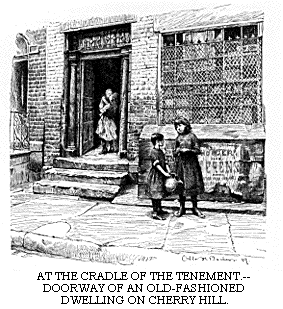
* In large cities, many immigrants
settled in mass tenement and apartment complexes that were affordable
but often exhibited uncomfortable living conditions. |
|
|
|
“New
York in those days had no skyscrapers. Horse tram cars ran across town.
The buildings were generally small and unpretentious. Then, as now, the
East Side was the home of the latest immigrants who settled in colonies
making the Irish, the German, the English, and the Dutch, and the
Ghetto districts. Father began making cigars at home and I helped him.
Our house was just opposite a slaughter house. All day long we could
see the animals being driven into the slaughter-pens and could hear the
turmoil and the cries of the animals. The neighborhood was filled with
the penetrating, sickening odor.”
~ Samuel Gompers |
|
|
* Immigrant families often served
as the basic economic unit; they provided assistance to their members
and pooled resources together. The location of immigrants’ relatives
would also often affect their destination.
*
Boarding with relatives or native middle and working-class families was
a common transitional stage for many young immigrants.
*
Mobility was high: the families who inhabited a certain neighborhood
were unlikely to be there in 5 or 10 years. Though ethnic districts
existed, most white immigrants lived in ethnically mixed neighborhoods. |
|
|
P R O C E E D. |
|